THE SECRET LIFE OF EVERY BLOOD BAG: What Happens In The Lab After You Leave The Chair
Many of us are familiar with the experience of donating blood. You sit, you breathe, you squeeze your fist, and in a few minutes, you’re done. But the moment you stand up and walk away, your blood begins a journey that you may never get to see. Don’t worry, that’s what I am about to let you in on now.
It’s a quiet journey, but a powerful one.
Here’s the story.
Your Blood Gets A Name
As soon as the bleeders seal the bag, they proceed to a bench for its naming ceremony – and sometimes this is done before the donation begins. They whip out a label containing a unique code or identifier. This could be a simple string of numbers or a barcode. So your blood gets a traceable identity from start to finish. And when it is eventually used, in some places, you get an alert that your particular blood bag has been used. For example:
“Your blood has just been used to save a 5-year-old child who fell from a height on his school playground”
Your Blood Gets Power To Save 3 Lives
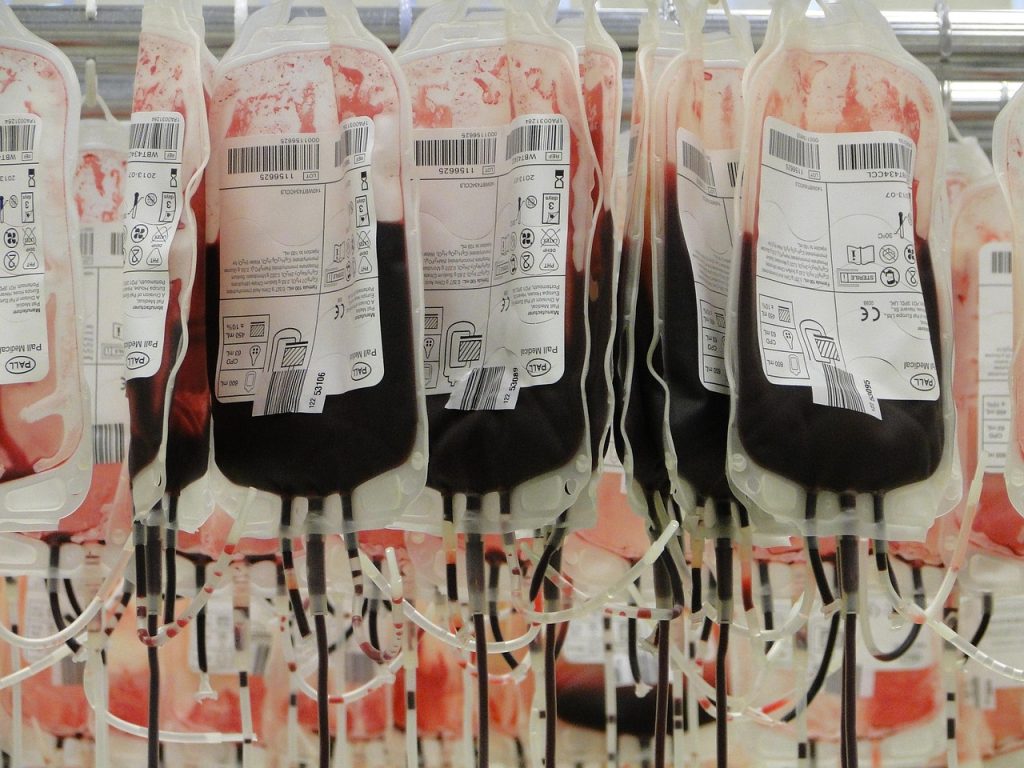
Your blood is taken into a lab room filled with machines humming softly. There, it enters the centrifuge (a machine that spins at very high speed).
Inside that spin, your blood separates into layers: Red cells at the bottom, Plasma floating on top and Platelets forming a thin layer in the middle.
Red cells are the blood cells that carry oxygen around the body, helping every organ get the energy it needs to function. When separated, they are used for significant anaemia and acute blood loss.
Plasma is the yellowish, liquid component of blood that carries water, salts, nutrients, and crucial proteins, including clotting factors and antibodies. When separated, they are used to restore blood volume and replace the lost components of blood.
Platelets are tiny cell fragments that are vital for blood clotting (hemostasis). When a blood vessel is damaged, platelets rush to the site to form a plug. So they are used for those who may have bleeding disorders.
Can I tell you an inside secret?
When we say one blood donation can save three lives, this is exactly what we mean.
Hehe, no, it’s not that your blood will be shared into 3 portions. Now you know.
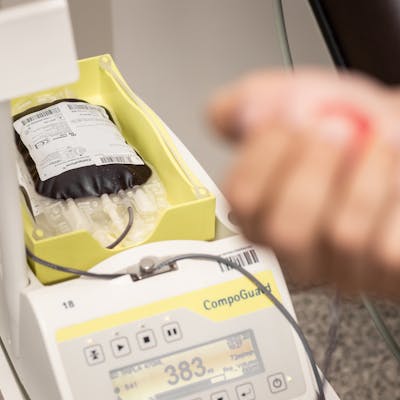
After separation, each component is moved into its own sterile bag. Each one is stored in a way that keeps it safe and useful. Red cells go into a special refrigerator. Plasma is frozen quickly. Platelets are placed on a gentle rocking machine to keep them active.
Your single act of kindness has now been divided into three tools. And each one with its own potential to save 3 different future patients.
Your Blood Gets Tested
Remember those small tubes filled with your blood during your donation?
They now enter another part of the lab where they’re tested for: Blood group, Rhesus type and infections like HIV, hepatitis B and C, syphilis, etc.
It’s not enough to give blood. The blood must also be safe. Else, the recipient would be in a worse state than they already are. This is why this step is necessary.
The blood group is tested to ensure that the donated blood is compatible with the recipient. If someone receives the wrong blood group, it can cause a serious immune reaction that can be life-threatening.
The Rhesus type is checked to prevent complications related to the Rh factor, especially in women of childbearing age. If Rh-negative patients receive Rh-positive blood, it can trigger immune reactions and affect future pregnancies.
The blood is screened for infections to prevent transmissible infections from being transfused into a recipient. Imagine going through a surgery to restore a broken arm, only to go home with HIV.
So, no blood moves forward until the result shows the blood is clean and clear.
If anything looks unusual, the unit is set aside, and the donor is contacted privately.
Once all tests are confirmed, your blood officially enters the blood bank inventory. At this point, it’s ready to be used for anyone who needs it.
Think of it like a book in a library, waiting for the reader who needs that exact story.
And indeed your blood becomes part of someone’s story. Because it ensures that one person’s story does not end because you gave your blood.
Your Blood Saves A Life
A Call Comes In
Somewhere, someone needs your blood.
It might be for a surgery. It might be for a mother who lost blood during childbirth. It might be for a child with severe anaemia. It might be for someone in an emergency room fighting to stay alive.
Your donation is selected from the shelf.
But it doesn’t leave yet.
There is one last safety check: cross-matching.
This is where the patient’s blood is matched against yours to ensure perfect compatibility. Only when everything aligns does the unit get cleared for transfusion.
Finally, your blood reaches the patient who needs it. They may never meet you. They may never know your name. But your generosity becomes strength in their body. It becomes oxygen in their tissues. It becomes a second chance at life.
In that quiet moment, your blood’s journey in the blood bank ends—but a new journey begins. This time, not in you. Not in the lab. This time, it flows through the veins of another, giving life, hope, and healing.
A simple act on your part becomes a long chain of lifesaving steps.
And maybe that’s the true secret life of your blood. That it never truly ends. That it lives on in the lives of others.